In the past few weeks, I've experienced many events that helped me learn more about my topic. First, my family and I had to fly back to Taiwan due to the sudden death of my grandfather. After attending the funeral, I heard that my 4-year-old cousin and my grandmother witnessed the entire incident, which worries me, especially because I was studying PTSD. My aunt later told me that my little cousin, who was left with my grandpa until the last second, was terrified as she witnessed my grandpa falling to the ground and losing consciousness. She was crying so hard and was saying that she doesn't want grandpa to disappear. My grandma, who ran upstairs after hearing a big crash, was not able to save my grandpa on time and was devastated when the hospital revealed the time of death. After hearing the details, I became very worried about my loved ones being diagnosed with stress disorder as death is one of the most common causes of PTSD. Thinking about the incident, I began remembering many cases of children and elders being diagnosed with PTSD after an experiencing traumatizing event. Using my knowledge, I informed my parents about what I learned and told them to be aware of the disorder.
Through this incident, I was able to understand more about PTSD and also raise awareness among my relatives. I was also able to use the facts that I learned to give my parents some useful information that might help my grandma and my cousin in the future. One of the things that I learned about myself is that I really want to help people who suffer from depression and sadness. I am hoping to help my loved ones walk through this sad period of time.
One of the setbacks that i have is that I was not and is still not able to do much on my project except researching. This is because I am still in Taiwan and is still staying at a place where it is hard to get internet. My next step is to quickly start on my presentation after going back to America.
Friday, April 1, 2016

Thursday, March 24, 2016
Unit 8 Reflection
In Unit 8, the key concept that we
learned about is evolution. Evolution is the change in allele frequencies over
time. Some factors that lead to evolution are natural selection, which is when
the individuals with favorable traits survive, and artificial breeding, which
is when humans breed two different individuals to produce new traits. The
change of allele frequencies can be seen in our hunger games lab, which shows
how the big “A” allele’s percentage decreased while the small “a” increase over
time. This lab also shows that individuals phenotype favored by the nature will
survive and reproduce, thus shifting the alleles in the gene pool. Although
some of the traits are less useful, it is important that the alleles for these
traits to exist in the gene pool. This is because variation is key to the
survival of a species. Variation is really important because if there is a
change in climate or environment, the traits that were once useless may
suddenly become favorable, potentially helping the entire species survive. In
addition to the concept of evolution, we also learned essential points about
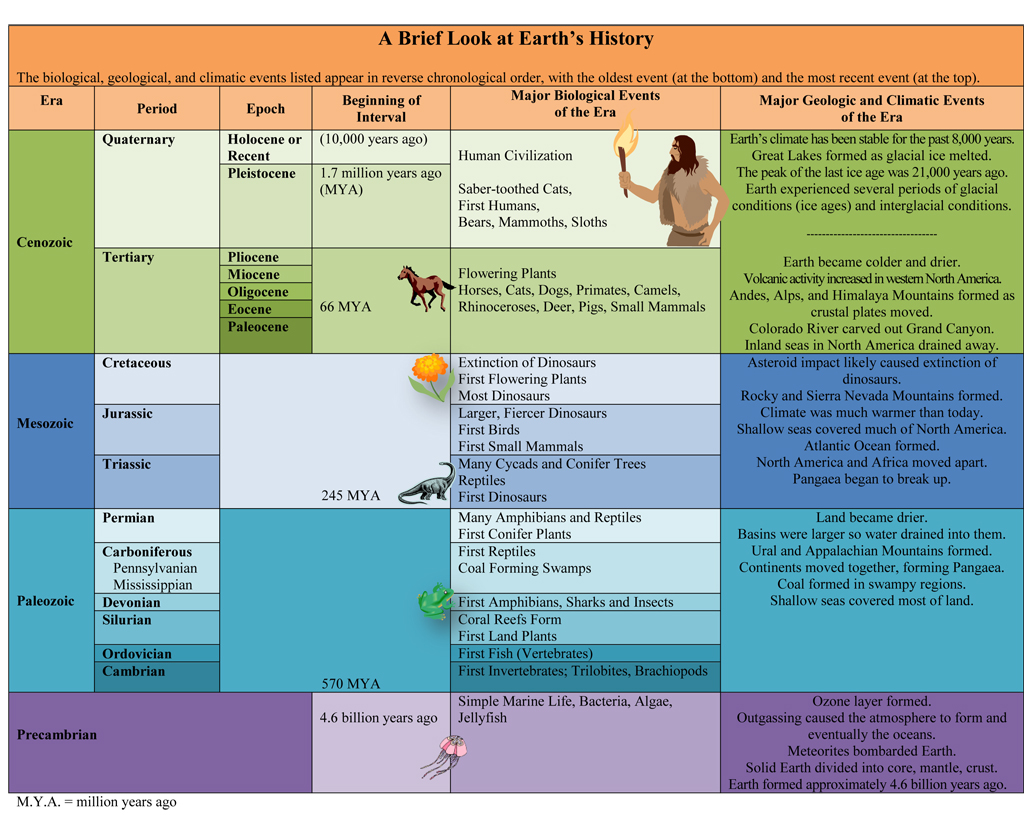
Earth’s history. We created a geologic timeline that shows major eras and
periods. Through this lesson, we are able to recognize the how short human has
been staying on Earth. While others species, like dinosaurs, have occupied
Earth for a long period of time, humans only took up an extremely small
fraction of Earth’s history. This understanding helps us recognize the huge
scale of the history of Earth.
I want to learn more about how
humans evolve. One of the questions I have is “Will humans eventually evolve?”
In order to become more assertive,
I’ve tried to share my ideas with my group and be open-minded to others’
suggestions. However, I still need to
work on being more confident

http://www.ces.fau.edu/nasa/images/EarthsAtmostphere/GeologicHistory1024.jpg
Wednesday, March 23, 2016
Geologic Timeline Reflection
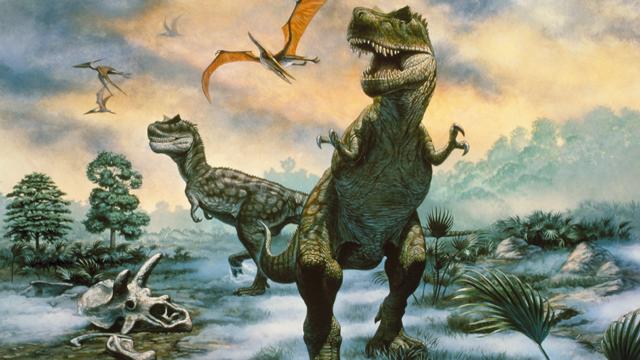
1) One of the major events on Earth's history is Ordovician-Silurian Mass Extinction. According to the study, this is the third largest extinction. This extinction wiped out 85% of sea creatures, contributing to the loss of different species in the ocean. The exticntion is said to be caused by a huge ice sheet, which is a major factor that led to the decrease in sea level and climate change. Another major event on Earth's histtory is the Permian Mass Extinction. According to the study, this is by far the worst extinction. It is known as the great dying because it almost ended life on Earth. This extinction wiped out 96% of life, leaving only 4% of species alive on Earth. The third major event is the Cretaceous -Tertiary Mass Extinction. This event is famous for wiping out all the dinosaurs that once ruled Earth. This extinction also killed 76% of life on Earth. Without this extinction, there is a great chance that Earth is always going to be dominated by dinosaurs.
2) The scale of Earth's history is huge. The thing that surprised me is the fact that we, human, only appear during an extremely small fraction of Earth's history. Another thing that surprised me is how the mass extinctions did not wipe out all life on Earth.
3) We have a huge impact on Earth in a short time. We caused global warming, increase in air pollution, exessive usage of natural resources, and more. We are destroying are beautiful nature in the short time that human appears on Earth. I believe our actions will eventually lead to another mass extinction or even cause Earth to become a place humans can longer live in.
4) One question that I have is "Why are people saying that we are experiencing the sixth mass extinction? Is there any evidence?" Another question that I have is "How do species survive the mass extinction?"


2) The scale of Earth's history is huge. The thing that surprised me is the fact that we, human, only appear during an extremely small fraction of Earth's history. Another thing that surprised me is how the mass extinctions did not wipe out all life on Earth.
3) We have a huge impact on Earth in a short time. We caused global warming, increase in air pollution, exessive usage of natural resources, and more. We are destroying are beautiful nature in the short time that human appears on Earth. I believe our actions will eventually lead to another mass extinction or even cause Earth to become a place humans can longer live in.
4) One question that I have is "Why are people saying that we are experiencing the sixth mass extinction? Is there any evidence?" Another question that I have is "How do species survive the mass extinction?"
http://ichef.bbci.co.uk/naturelibrary/images/ic/640x360/t/ty/tyrannosauridae/tyrannosauridae_1.jpg

http://nbmpub.com/blog/wp-content/uploads/2012/11/history-of-earth_spread.jpg
Ordovician- Silurian mass extinctionOrdo mass exvician- Silurian mass extinctionOrdovician-Silurian mass extinction
Friday, March 18, 2016
The Hunger Games
1)In this lab, we did seven rounds of competition between three different types of species, which are stupmys, knucklers, and pinchers. The lab simulated natural selection by having the individuals with favorable trait survive and reproduce while the individuals with unfavorable trait die. It also simulated evolution as the alleles frequencies change over time.
2) The knucklers had the best phenotypes because they were able to produce largest amount of offspring.
3) I know that population evolved because the allele frequencies changed over time. For example, during the first two rounds, the frequency for A allele dropped dramatically from 52% to 31%, whereas the frequency rose from 48% to 69%. The frequencies for both alleles continue to change throughout different rounds of the experiment. In the end, the frequencies for A allele change from the original 52% to 40%, while the frequencies for a allele change from the original 48% to 60%, causing a shift in the gene pool.
4) Randomness in this lab includes the food distribution and special skills that individuals have. Something that is not random includes the feeding styles and the mating perferences. The random events affect the evolution by making certain individuals more skilled or lucky at getting food, which creates changes in numbers of surviving organisms and change in allele frequencies. The non random events cause change in allele frequencies based on the usefulness of the traits of the species.
5) The results would have been different if the food was larger or smaller. If the food is larger, the stumpeys might have an advantage over the knucklers and pinchers because stumpys’ traits allow to pick up something big and heavy quicker than the others. If the food is smaller, the pinchers might pick up food way faster than knucklers and stumpys. The change in food’s size has an great impact in nature. It causes some species to have better advantage as others’ traits become less useful.
6) Without the incomplete dominance, or the knucklers, the big A allele would disappear becuase the pinchers would dominate the population, causing the stumpeys to die.
7) Natural selection causes evolution.
8) Individuals used their hoodies,cheat, and push people to increase their likelihood of survivial and reproduction. This causes changes in allele frequency of the population. In nature, individuals or groups develop their own methods to increase the chance of survival.
9) The population evolves, not individuals. The nature acts on the phenotype because it rewards those with better traits.

Wednesday, March 16, 2016
Second Blog Post: Real Life Cases of PTSD
Over the past few weeks, I've been reading some statistics about PTSD. I discovered that women are more likely to be diagnosed with the disorder than men. Furthermore, the disorder is detected in roughly 30% Vietnam veterans, 10% Gulf War Veterans, about 6% to 11% veterans of the Afghanistan War, and 12% to 20% of veterans of Iraq War. Many of these patients start experiencing the symptoms of PTSD few months after the occurrence of the traumatizing event. The disorder is often accompanied by substance abuse, depression, and anxiety disorder.
In addition to the statistics, I’ve also gone over several cases of the PTSD patients. One of the example is a soldier who came back from Iraq War. He was overwhelmed with the happiness of being able to reunite with his family. However, when he was at the subway one day, feeling extremely intimidated as he watched a huge crowd of people walking past him. He started seeing flashbacks of the soldiers and his friends dying in the war. He was sweating and trembling as he felt the sense of guilt and terror. Eventually, he ran out of the subway station and darted right back home. When his wife asked what had happened, he replied with an aggressive voice, telling her to go away and leave him alone. This man was experiencing the symptoms of re-seeing the traumatizing event through flashbacks, seeing memories that are being triggered by a certain situation, and being overly sensitive and aggressive.
In the end, I've increased my knowledge about PTSD. I’ve also learned many interesting facts about this disorder. My next step is to start working on the brochure.
Monday, March 7, 2016
Bird Beak Lab


1) In this lab, we answer the question, “If the natural
selection occurs in a population, how do changes in selective pressures affect
the evolution of that species?” My hypothesis is “If there are individuals whose
trait helps them survive, then these individuals leave more offspring than the
others.” The evidence of this occurring is that the spoon bird, which is
getting the highest number of food, is producing the highest percentage of
offspring, which is 39% of the total. Darwin’s conclusion states that
individuals whose inherited trait helps them reproduce more and leave more
offspring. This supports my claim because the total population is consisted of
mostly spoon beak bird, showing that this type of bird leaves more offspring.
2) In this lab, we answer the question “If the natural
selection occurs in a population, how do changes in selective pressures affect
the evolution of that species?” We altered the experiment a little bit by only
putting ¼ of the amount of food for competition. My second hypothesis is “If
the individuals with favorable traits survive and reproduce, then the
population looks more and more like a winner over the generations.” The
evidence of this occurring is that the tweezer, which has a favorable trait,
produce 12 chicks out of the total of 19, dominating the population and making
the population look more like a winner. Darwin’s second conclusion states that
the unequal ability of individuals to survive and reproduce results in the
better traits becoming more common in the population over time. This supports
my hypothesis because the population consists of mostly birds with tweezer
beak, making the trait more common in the population.
The question we asked was ““If the natural selection occurs
in a population, how do changes in selective pressures affect the evolution of
that species?” We claim that individuals with better trait produce more
offspring than the others and make the trait become more common in population
and turn it into a winner. In part 1 of the lab, the spoon beak bird has a more
favorable trait, thus producing more offspring and dominating the population.
In part 2 of the lab, the tweezer has a more favorable trait, therefore
producing more offspring and making the population look more like a winner. Darwin’s
both conclusions state that individuals whose traits help them survive will
produce more offspring and making the trait become more common over time. This
supports my claim because the spoon bird and tweezer produce the highest number
of offspring in different rounds as they got a better trait that helped them
get more food.
While our hypothesis was supported by our data, there could
have been errors due to the unequal strengths of individual student in the
group. Due to these errors, in future experiment I recommend we have more time
and do more rounds of the testing. I also recommend that we switch our “beak
type” with people in our group to prove that it was the beak that is making the
difference, not an individual who is good at picking things with his hands.
The lab was done to prove Darwin’s two conclusions. From
this lab, I learned that indidviduals with better trait produce more and leave
more offspring, which helps me understand the process of evolution. Based on my
experience with this lab, I can analyze how evolution occurs in different species.

http://chefdanielangerer.typepad.com/.a/6a01053704bb64970c01156f774b4f970c-pi
Tuesday, March 1, 2016
20% Time Project: Post-traumatic Stress Disorder
Hello! This is a blog dedicated to spread awareness about post-traumatic stress disorder, or also know as PTSD. I will be doing research on this disorder and hopefully interviewing some of the patients. In the end, I will create a guideline that includes some effective treatments and ways to help people identify the symptoms of PTSD. My goal for this project is to educate students about the severity of the disorder by teaching them about the effects that it has on the patients’ lives. I also want to raise awareness about some of these psychological disorders that usually don’t receive much attention from the public.
My inspiration for this blog came from this project called 20% time. This is an amazing project that allows students to study different topics or do experiments on subjects that they are passionate about. Personally, I love studying psychology-related topics! When I was researching on different topics, I found out how trauma survivors, especially veterans, are very likely to suffer from symptoms of PTSD. I also discovered that people tend to classify these types of disorder as mild, insignificant conditions that don’t have much impact on a person’s life. Therefore, I’ve decided to use this 20% time project as a chance to inform the public about this disorder and encourage them to interact and help these PTSD patients.
My essential question for this project is “What are some of the effective ways to help people who struggle with PTSD?” To answer this question, I will be studying all the symptoms of the disorder and reading some of the patient’ feelings as they try to cope with the hardships. I will measure my progress by recording at least three important findings and two helpful treatments every week. Eventually, I will be create a visual plan, which is like a brochure, that fully explains the disorder and treatments.
By publishing this post, I am officially starting my research and study. My next step is to collect detailed information on my topic. This is it for today, thanks for reading!
Subscribe to:
Posts (Atom)